
We manufacture wide variety of industrial grade lead products for various purposes.
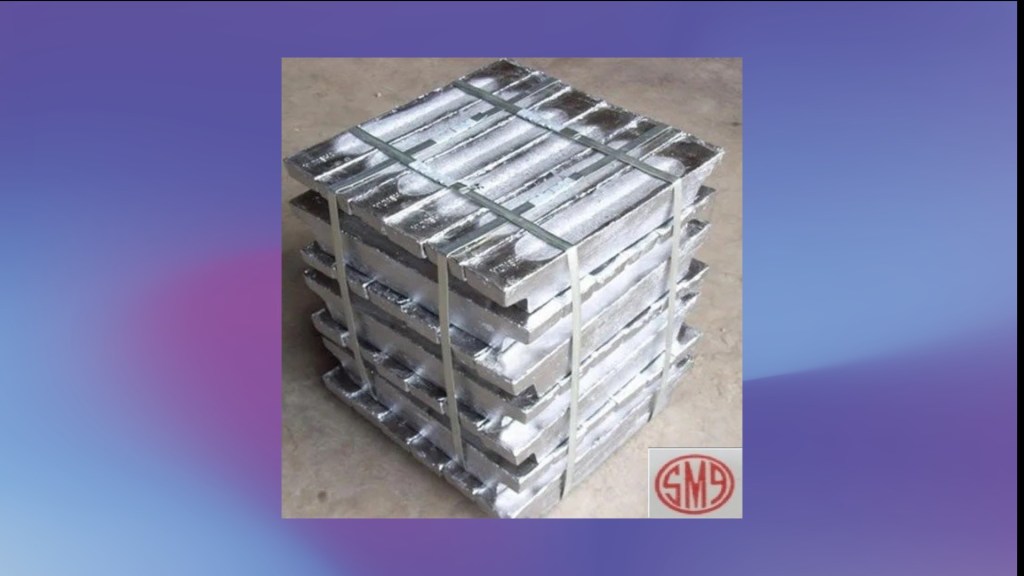
Lead ingots have several uses in various industries. Some of the most common uses of lead ingots are:
- Battery manufacturing: Lead-acid batteries are used in cars, trucks, boats, and other vehicles. The lead ingots are used to make the plates that store energy in these batteries.
- Radiation shielding: Lead is a dense metal that can absorb radiation, so lead ingots are used to make radiation shielding for medical and nuclear industry applications.
- Construction: Lead is used as a flashing material in roofs, walls, and chimneys to prevent water from entering the building. It is also used in soundproofing and vibration damping applications.
- Plumbing: Lead has been traditionally used in the manufacturing of plumbing materials such as pipes, fittings, and valves due to its corrosion resistance and malleability.
- Ammunition: Lead is used in bullets and other ammunition as it is a dense and soft metal that deforms on impact.
- Fishing tackle: Lead weights and sinkers are commonly used in fishing to sink the bait and hook to the desired depth.
- Ballast weights: Lead ingots are used as ballast weights in ships, airplanes, and other vehicles to maintain stability and balance.
- X-ray and CT scanning: Lead is used in the manufacturing of X-ray and CT scanning equipment as it can block X-ray beams.
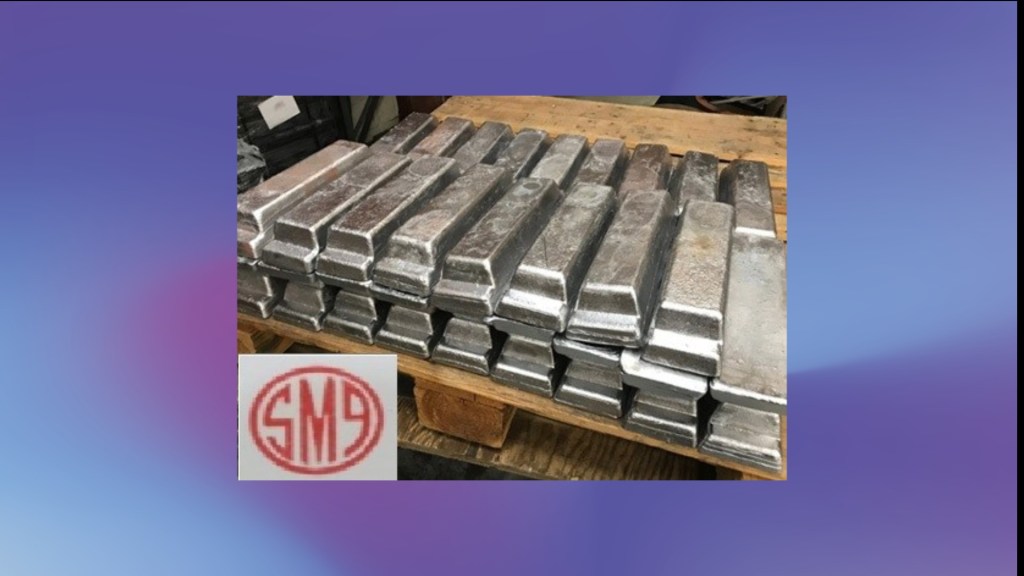
Secondary refined lead is produced by recycling lead-based products and is commonly used in various industries. Some of the most common uses of secondary refined lead are:
- Battery manufacturing: Secondary refined lead is used to make lead-acid batteries for various applications, including automotive, marine, and stationary power storage.
- Radiation shielding: Secondary refined lead is used to make radiation shielding for medical and nuclear industry applications, including X-ray and nuclear medicine equipment.
- Construction: Secondary refined lead is used in construction for roofing materials, flashings, gutters, and soundproofing.
- Ammunition: Secondary refined lead is used in the production of bullets and other ammunition due to its density and softness, which deforms on impact.
- Electronics: Secondary refined lead is used in the production of electronics, including televisions, computers, and mobile phones.
- Metal alloys: Secondary refined lead is used as an alloying element in the production of other metals, including brass, bronze, and tin.
- Plumbing: Secondary refined lead is used in the production of pipes, fittings, and valves for plumbing systems due to its corrosion resistance and malleability.
- Other industrial applications: Secondary refined lead is used in other applications, including weights and ballasts, fishing tackle, and solders.

Lead suboxide, also known as grey oxide or battery oxide, is a grayish-green powder that is commonly used in the production of lead-acid batteries. Some of the most common uses of lead suboxide are:
- Battery manufacturing: Lead suboxide is the key ingredient used to produce the positive electrode of lead-acid batteries. It is used as a paste that is applied to the battery plate and then cured in an oven.
- Paints and pigments: Lead suboxide is used in the production of certain types of paints and pigments, including lead chromate pigments, which are used for their bright yellow and orange colors.
- Glass and ceramics: Lead suboxide is used in the production of glass and ceramics to increase their refractive index and improve their optical properties.
- Rubber industry: Lead suboxide is used in the rubber industry as a vulcanization agent to help cure rubber and improve its mechanical properties.
- Explosives: Lead suboxide is used as an oxidizing agent in the production of certain types of explosives.
- Other industrial applications: Lead suboxide is also used in other industrial applications, including as a pigment for plastic materials, as an additive in lubricants, and as a component of soldering flux.

Red lead, also known as lead tetroxide, is a bright red or orange powder that is commonly used in several industries. Some of the most common uses of red lead are:
- Battery manufacturing: Red lead is used as a paste to produce the positive electrode in lead-acid batteries. The red lead paste is applied to the battery plate and then cured in an oven.
- Paints and pigments: Red lead is used in the production of paints, coatings, and pigments, particularly in the construction industry, due to its ability to resist corrosion and weathering.
- Glass and ceramics: Red lead is used in the production of high-quality glass and ceramics due to its high refractive index and ability to improve the mechanical properties of these materials.
- Explosives: Red lead is used as an oxidizing agent in the production of certain types of explosives.
- Other industrial applications: Red lead is also used in other industrial applications, including as a radiation shield, as a vulcanizing agent for rubber, as a component of soldering flux, and as an additive in lubricants.
Battery grade lead alloys are specialized alloys that are used in the production of lead-acid batteries. These alloys are specifically designed to meet the unique requirements of battery manufacturing, including high electrical conductivity, low internal resistance, and resistance to corrosion. Some of the most common uses of battery grade lead alloys are:
- Battery manufacturing: Battery grade lead alloys are the key component used to produce the positive and negative electrodes in lead-acid batteries. These alloys are carefully formulated to ensure high electrical conductivity and low internal resistance, which are critical for battery performance.
- Radiation shielding: Battery grade lead alloys are used in the production of radiation shielding materials for medical and nuclear industry applications, including X-ray and nuclear medicine equipment.
- Construction: Battery grade lead alloys are used in the construction industry for roofing materials, flashings, and other applications where corrosion resistance is important.
- Automotive industry: Battery grade lead alloys are used in the production of automotive parts, including wheel weights, bearings, and bushings.
- Electronics industry: Battery grade lead alloys are used in the production of electronics, including televisions, computers, and mobile phones.
- Other industrial applications: Battery grade lead alloys are used in other applications, including fishing tackle, weights and ballasts, and solders.
Master alloys of lead are specialized alloys that contain high concentrations of one or more elements that are added to other alloys or metals to modify their properties. While lead is primarily used as a base metal for the production of alloys such as solder, there are some lead master alloys that are used in specific industrial applications. Here are some examples:
- Antimonial lead: This is a lead alloy that contains high concentrations of antimony. Antimonial lead is commonly used in the production of storage batteries and ammunition.
- Calcium lead: This is a lead alloy that contains high concentrations of calcium. Calcium lead is used in the production of lead-acid batteries.
- Selenium lead: This is a lead alloy that contains high concentrations of selenium. Selenium lead is used in the production of cathodes for certain types of electronic devices, such as photocopiers and laser printers.
- Tellurium lead: This is a lead alloy that contains high concentrations of tellurium. Tellurium lead is used in the production of lead-acid batteries and in the production of semiconductors.
- Bismuth lead: This is a lead alloy that contains high concentrations of bismuth. Bismuth lead is used in the production of fusible alloys, which are used in automatic sprinkler systems and as a low-melting-point solder.
Master alloys of lead are typically used in applications where a specific combination of physical and mechanical properties is required. By adding small amounts of master alloys to other alloys or metals, it is possible to modify their properties to suit a specific application.
Lead-Acid Batteries are also available with a wide range of options to choose from and used for different purposes.
 Standard Metal Industries